Processing is a flexible software sketchbook and a language for learning how to code. Since 2001, Processing has promoted software literacy within the visual arts and visual literacy within technology.
Processing uses the Java programming language, with additional simplifications such as additional classes and aliased mathematical functions and operations. It also provides a graphical user interface for simplifying the compilation and execution stage.
Processing is a free, open-source coding language for visual art developed by Ben Fry and Casey Reas, former classmates at the MIT Media Lab. Launched in 2001 as Proce55ing, the project encompasses a programming environment designed for artists’ use, and a community of practitioners.
Processing was created in 2001 by Ben Fry and Casey Reas, who were both students at the Massachusetts Institute of Technology (MIT) at the time. They wanted to create a programming language that was easy to learn and use, while still being powerful enough to create complex interactive applications.
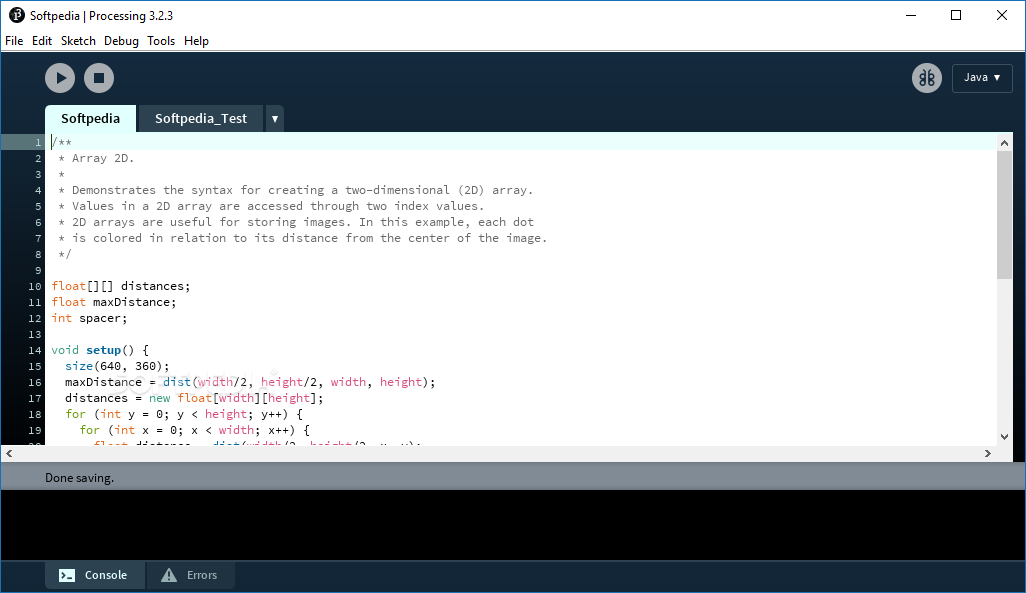
Processing is not exactly an application in the traditional sense, but rather a tool that can help you learn how to code via computer graphics, animations and visual art.
Join me in this beginner-friendly video series and choo-choo-choose to embark on an exciting journey with Processing, a versatile and artist-friendly programming language and environment.
The Processing Environment includes a text editor, a compiler, and a display window. It enables the creation of software within a carefully designed set of constraints.
A collection of step-by-step lessons introducing Processing (with Python). Many of these tutorials were directly translated into Python from their Java counterparts by the Processing.py documentation team and are accordingly credited to their original authors.
If you'd like to learn more, we encourage you to visit the Processing web site as well as the other wonderful tutorials at code.org. If you have questions or feedback about the tutorial, we'd love to hear from you!